
The Barbarians or The Oracle: Two Ways to Build an Empire
KKR and Berkshire Hathaway built empires from opposite ends of Wall Street. One used leverage, speed, and transformation. The other used patience, permanence, and trust. Now they’re converging—and that tells us more about capitalism than either firm alone.
KKR and Berkshire Hathaway represent the two poles of American capital allocation philosophy. One buys companies to transform and sell them. The other buys companies to keep them forever. One uses leverage as a tool. The other treats it as a weapon. One has $723 billion in assets under management across 553 portfolio companies. The other has a $1 trillion market cap, 60+ wholly owned subsidiaries, a $267 billion stock portfolio, and $382 billion in cash. Both have generated extraordinary returns. Both are led by people of exceptional ability. And in 2026, both are converging toward something that looks remarkably like each other—a development that tells us more about where capitalism is headed than any academic paper or policy debate.
Introduction: The Barbarian and the Oracle
When Warren Buffett announced his retirement in May 2025 at 94, it felt like the end of something larger than one man’s career. The GOAT of investing was stepping back. Buffett didn’t just compound capital at 19.9 percent annually for six decades—he coined the metaphors I, and many others, sometimes think in when trying to evaluate a company (or when I try to show off my investing chops at trivia): moats, circles of competence, the eighth wonder of the world being compound interest. With him stepping back, I hyper-fixated on his career and a question that had always nagged at me: how does someone become the actual GOAT of something so hard to differentiate yourself at from the indexes? Investing is not sports. It is not music. Sure, there are different theories and models one can craft, but those all get copied over time if they have any edge. And yet Buffett found ways to outperform—decade after decade, across market regimes, through recessions and manias—for sixty years. To paraphrase Seth Klarman—a pretty good investor in his own right, and someone who can talk with more authority on the greatness of Buffett than I ever could—in a wonderful piece covering Buffett’s career for The Atlantic (everyone should read it): if investing had All-Star selections the way sports do, Buffett would have been a 60-plus-time selection.
I have been absorbing Buffett’s shareholder letters and interviews for a long time now, and in the weeks after his retirement I found myself rereading many of the things that have left a lasting impact on my thinking about economics and capital allocation. Then, talking to a family friend one day about Buffett’s retirement, the friend asked me—completely unrelated—if I had ever read Barbarians at the Gate. I hadn’t. I bought a copy that night and finished it in two sittings. The book is phenomenal. And the rabbit hole it sent me down—into KKR’s evolution from the firm that became synonymous with 1980s Wall Street excess into something that looks increasingly like a different kind of Berkshire Hathaway—became this paper.
Because the deeper I went, the more I realized that the two most influential investment firms in American history were converging on the same conclusion about what creates value—and that convergence tells us something essential about where capitalism is headed.
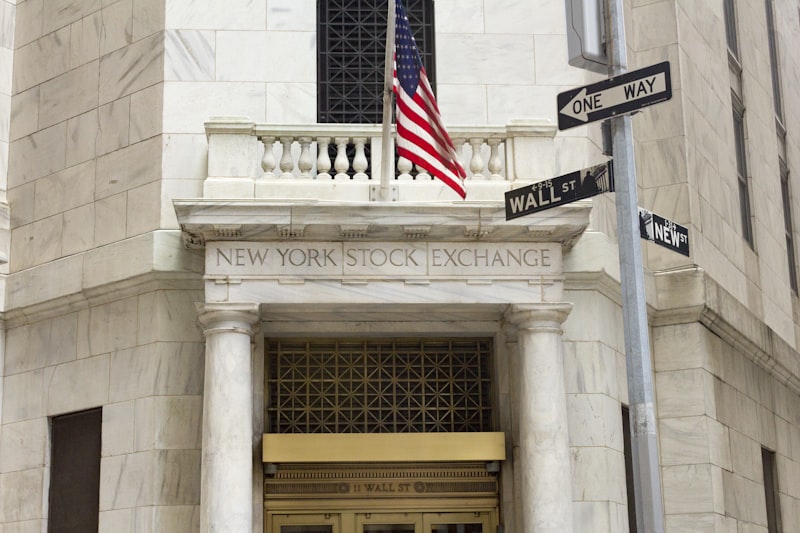
In 1989, KKR closed the leveraged buyout of RJR Nabisco for roughly $25 billion plus assumed debt—a deal so aggressive, so laden with debt, so emblematic of Wall Street excess that it became the subject of a bestselling book titled Barbarians at the Gate. Henry Kravis and George Roberts had built KKR on a simple premise: buy companies with borrowed money, restructure them to generate more cash, and sell them at a profit within five to seven years. It worked spectacularly. It also left wreckage: companies gutted to service debt, workers laid off to meet interest payments, and a public perception of private equity as strip-mining with spreadsheets.
That same year, 1989, Warren Buffett was sitting in Omaha doing something much quieter. He had owned See’s Candies since 1972, had been building his stake in GEICO since 1976, and owned Nebraska Furniture Mart since 1983. He hadn’t sold any of them. He had no plans to sell any of them. His approach was the philosophical inverse of the leveraged buyout: buy wonderful businesses at reasonable prices, let excellent management teams continue doing what they already did well, and hold them forever. No financial engineering. No restructuring. No exit strategy. Buffett’s favorite holding period, as he famously put it, was forever.
For decades, these two approaches represented opposite ends of the ownership spectrum—and produced two of the most remarkable track records in the history of American capitalism. Berkshire Hathaway compounded at 19.9 percent annually from 1965 through 2024, turning $1,000 into $55 million. KKR, from its founding in 1976, grew into one of the largest private equity firms in the world by assets under management, completing 770 private equity investments with approximately $790 billion in total enterprise value.
I respect both firms enormously. I respect the people who built them and the people who run them now. And I think the most interesting question in capital allocation today is not which approach is better, but why the two are converging—and what that convergence reveals about what actually creates value in the real economy.
II. Berkshire Hathaway: The Permanent Owner
The Philosophy
Buffett’s approach was deceptively simple. He looked for businesses with durable competitive advantages—“moats,” in his language—that were run by honest and capable managers, available at prices that provided a margin of safety. When he found them, he bought them. Then he did the thing that made him different from virtually every other capital allocator on the planet: he left them alone.
A close associate of Buffett’s once observed that his most exceptional ability was not analyzing businesses—though he was peerless at that—but reading people. He could assess, in a single meeting, whether a management team had the competence, integrity, and passion to run a business without interference. When he found those people, he gave them something almost no one in corporate America receives: genuine autonomy backed by permanent capital. No quarterly earnings pressure. No board mandates to hit short-term targets. No threat of being sold to a higher bidder.
The result was a collection of businesses that chose to be owned by Berkshire—and whose managers performed at extraordinary levels precisely because of the trust Buffett extended. When Nebraska Furniture Mart’s founder, Rose Blumkin, sold to Berkshire in 1983, she kept running the store until she was 104 years old. When Ajit Jain took over Berkshire’s reinsurance operations, he built it into one of the most profitable insurance businesses in the world, operating with virtually no interference from Omaha.
The Portfolio
Berkshire Hathaway as of early 2026 is a $1 trillion enterprise that defies categorization. It is simultaneously an insurance company, a railroad, an energy utility, a consumer products conglomerate, and one of the largest public equity portfolios in the world.
Wholly owned subsidiaries include over 60 businesses spanning every major sector: GEICO and Berkshire Hathaway Reinsurance Group (insurance), BNSF Railway (transportation), Berkshire Hathaway Energy (utilities), Precision Castparts ($37.2 billion acquisition in 2016, its largest ever), Lubrizol (specialty chemicals), Clayton Homes, Dairy Queen, Duracell, See’s Candies, Fruit of the Loom, Pilot Travel Centers (which alone generated $46.9 billion in revenue in 2024), Marmon Holdings (100+ manufacturing businesses), and many more. These subsidiaries produced combined operating revenues exceeding $50 billion through the first nine months of 2025 from BNSF and BHE alone.
The public equity portfolio held 41 positions valued at $267.3 billion as of September 30, 2025. The concentration is striking and intentional: Apple (22.7%, $60.7B), American Express, Bank of America ($26.4B), Coca-Cola ($28.6B, held since 1988 without selling a single share), and Chevron ($19.8B) together account for roughly 56 percent of the portfolio. Recent moves included initiating a $4.3 billion stake in Alphabet, substantially exiting BYD, and reducing positions in Apple and Bank of America. Buffett also increased stakes in five Japanese trading houses, a position he began building in 2019.
The cash pile is staggering: $381.7 billion in cash and cash equivalents as of Q3 2025, heavily weighted toward short-term U.S. Treasury bills. This is both a statement about current market valuations—Buffett sees very little worth buying at these prices—and a permanent structural feature. Berkshire always maintains enough liquidity to write massive insurance checks after catastrophes, seize once-in-a-decade acquisition opportunities, and never borrow money under duress.
The Transition
In May 2025, Buffett shocked the investing world by announcing his retirement. Greg Abel assumed the CEO role on January 1, 2026, marking the end of a six-decade tenure that produced more wealth for shareholders than the entire asset management industry combined. The transition was quintessentially Buffett: no drama, no power struggle, no uncertainty. Abel had been groomed for years, the board had approved the plan, and Buffett remained as chairman. The question now is whether the Berkshire model—which depended so heavily on one person’s judgment, relationships, and reputation—can survive the departure of that person. The early evidence is encouraging: Berkshire’s stock hit all-time highs in the months following the announcement.
III. KKR: The Transformational Owner
The Philosophy
KKR was founded in 1976 by Jerome Kohlberg Jr., Henry Kravis, and George Roberts, three former Bear Stearns bankers who had pioneered leveraged buyout transactions. The premise was elegant in its financial logic: buy a company using primarily borrowed money (often 80–90 percent debt), use the company’s own cash flows to service the debt, improve operations to increase those cash flows, and sell the company within five to seven years at a profit that would be magnified by the leverage.
The approach required three things that KKR had in abundance: access to capital markets, the ability to identify operational improvements that incumbent management had missed or lacked the incentive to pursue, and the willingness to make hard decisions about cost structures, management teams, and strategic direction. When it worked—which was often—the returns were extraordinary. When it didn’t—Toys “R” Us being the most painful example—the debt load destroyed companies that might have survived under different ownership structures.
The RJR Nabisco deal crystallized both the power and the peril of the model. KKR won a fierce bidding war with an offer valued at roughly $25 billion (over $31 billion including assumed debt)—financed heavily with high-yield bonds—making it the largest LBO in history. The deal worked financially (KKR eventually profited), but required multiple debt restructurings, an additional $1.7 billion equity injection, and years of asset sales. It made KKR famous. It also made the phrase “barbarians at the gate” a permanent part of the financial lexicon.
The Modern KKR
The KKR of 2026 bears only passing resemblance to the firm that bought RJR Nabisco. Under co-CEOs Scott Nuttall and Joseph Bae, KKR has evolved into a diversified global asset manager with $723 billion in assets under management, $585 billion in fee-earning AUM, and $115 billion in uncalled capital. It manages 553 portfolio companies across private equity, infrastructure, real estate, credit, and insurance. Recurring earnings now account for 80 percent of total segment earnings.
The portfolio spans sectors and geographies at a scale that Kravis and Roberts could not have imagined in 1976. Recent deals illustrate the range: the $10 billion acquisition of ST Telemedia’s data center assets in Singapore (January 2026), the $1.4 billion acquisition of Arctos Partners—the largest institutional investor in professional sports franchises, approved for multi-team ownership across all five major U.S. leagues (February 2026), the £4.7 billion acquisition of Spectris in the UK (July 2025), and the privatization of Topcon in Japan for ¥256 billion. In 2023, KKR acquired Simon & Schuster for $1.6 billion and gave employees equity in the company—a move that would have been inconceivable in the RJR Nabisco era.
The full acquisition of Global Atlantic, an insurance company—KKR paid $4.7 billion for the initial majority stake in 2021 and approximately $2.7 billion for the remaining minority interest in 2024—is perhaps the most strategically significant move. Insurance provides what Buffett always understood was the ultimate competitive advantage: permanent capital in the form of insurance float. With Global Atlantic, KKR now has access to the same structural advantage that powered Berkshire Hathaway’s compounding machine for six decades.
The Employee Ownership Dimension
One of the most underreported aspects of modern KKR is its commitment to employee equity participation. Seventy portfolio companies have distributed ownership stakes to nearly 170,000 rank-and-file employees—not executives, not senior management, but warehouse workers, customer service representatives, and factory floor operators. This is a meaningful philosophical evolution from the cost-cutting model of the 1980s. KKR has learned, empirically, that aligned incentives across the entire organization produce better operating outcomes than top-down restructuring alone.
IV. The Numbers: A Side-by-Side Comparison
| Dimension | Berkshire Hathaway | KKR |
|---|---|---|
| Founded | 1965 (Buffett takeover) | 1976 |
| Market Cap | ~$1 trillion | ~$115 billion |
| AUM / Total Assets | $1.1T+ total assets | $723B AUM |
| Wholly Owned Companies | 60+ subsidiaries | 553 portfolio companies |
| Public Equity Portfolio | $267.3B (41 positions) | N/A (not primary strategy) |
| Cash & Equivalents | $381.7B | $115B dry powder |
| Insurance Float | $174B (GEICO, BH Re) | Growing (Global Atlantic) |
| Holding Period | Forever | 5–7 years (shifting to 10–20+) |
| Use of Leverage | Minimal; avoids debt | Central to traditional model |
| Revenue Model | Operating earnings + investment income | Management fees + carried interest + balance sheet |
| Long-term CAGR | 19.9% (1965–2024) | ~20% net IRR (legacy PE funds; recent vintages 12–18% net) |
| Signature Deal | See’s Candies (1972, never sold) | RJR Nabisco (~$25B, 1989) |
| Leadership | Greg Abel (CEO since Jan 2026) | Scott Nuttall & Joseph Bae (Co-CEOs) |
| Employees w/ Equity | N/A (subsidiaries are wholly owned) | 170,000 across 70 companies |
Performance: The Returns Deep Dive
Comparing returns between the two firms requires intellectual honesty about what the numbers represent. Berkshire’s 19.9 percent CAGR is a public equity return on a single, always-liquid security. KKR’s returns come in two flavors: fund-level IRRs on illiquid, leveraged private equity investments, and stock-level returns on KKR’s publicly traded shares. The three are structurally different instruments. But the numbers are instructive.
Berkshire Hathaway: The 60-Year Record
Buffett’s track record is the most thoroughly documented in investment history. From 1965 through 2024: a 19.9 percent compounded annual return versus 10.4 percent for the S&P 500. Total return: 5,502,284 percent versus 39,054 percent. A $1,000 investment in 1965 would be worth $55 million today. Berkshire outperformed the S&P 500 in 40 of 60 years. In the 13 years the S&P 500 declined, Berkshire fell more only twice.
The record is not uniform across time. Most of Berkshire’s alpha was generated in the first three decades. Over the past 20 years (2003–2023), Berkshire delivered approximately 10.5 percent annualized, slightly trailing the S&P 500’s 11.1 percent. Over the last 10 years (2014–2023), Berkshire produced an 11.8 percent CAGR versus 12.0 percent for the index. This narrowing reflects the math of scale: it is harder to compound at 20 percent on a $1 trillion base than on a $100 million base. In 2024, Berkshire regained its edge with a 25.5 percent gain versus the S&P’s 23.3 percent. In 2025, through Buffett’s retirement announcement, Berkshire climbed 19 percent while the S&P dropped 3 percent.
KKR Fund-Level Returns: The Private Equity Record
KKR’s fund-level performance tells the story of an industry maturing. The early funds were spectacular. Legacy investments from 1976 through 1998—the era that included RJR Nabisco—generated a 26 percent gross IRR, 20 percent net IRR, and a 3.0x gross multiple of invested capital on $16 billion deployed. The 1976–1979 vintage produced a 17x multiple and 36 percent net IRR on just $31 million invested.
Post-1999, returns moderated as more capital chased fewer opportunities. All private capital funds raised from 1999 onward invested $168 billion—ten times the legacy amount—and generated a 16 percent gross IRR and 12.3 percent net IRR with a 1.8x gross multiple. The law of large numbers is unforgiving in private equity just as it is in public markets.
Individual fund performance has varied by vintage:
NA Fund XI (2012 vintage): 24.0% gross IRR, 18.1% net IRR, 1.5x gross multiple (as of Dec 2016)
Americas Fund XII (2017 vintage): 50.1% gross / 41.9% net IRR at peak (Dec 2021); settled to 20.5% net IRR by Mar 2024 as marks normalized. 2.6x gross / 2.2x net multiple.
NA Fund XI + XII combined (predecessor funds): 30.1% gross / 25.1% net IRR, 2.6x gross / 2.2x net multiple, outperforming S&P 500 by over 850 basis points.
NA Fund XIII (2021 vintage, $19B): Early stage; performance data limited.
NA Fund XIV (current fundraise, ~$20B target): Targeting high-teens net IRR.
—KKR SEC 10-K (2024); Chicago Teachers’ Pension Fund filings; PitchBook; CFA Institute
KKR as a Public Stock
Since KKR became publicly traded, its stock has been a high-volatility, high-return instrument that looks nothing like Berkshire’s steady compounder. The numbers:
| Period | KKR Stock Total Return CAGR | Berkshire (BRK) CAGR | S&P 500 CAGR |
|---|---|---|---|
| 15-Year | ~20.2% | ~13.5% | ~12.5% |
| 10-Year | ~24.0% | ~11.8% | ~12.6% |
| 5-Year | ~28.0% | ~17.5% | ~14.0% |
| 3-Year | ~40.5% | ~22.0% | ~10.0% |
KKR’s stock has dramatically outperformed both Berkshire and the S&P 500 over 5, 10, and 15-year horizons. A $1,000 investment in KKR 10 years ago would be worth approximately $8,400 today (739 percent total return). The same $1,000 in Berkshire would be worth roughly $3,050, and in the S&P 500 about $3,300.
But the ride was incomparably rougher. KKR dropped 37 percent in 2022 while Berkshire gained 4 percent. KKR surged roughly 80 percent in 2023 and nearly 80 percent in 2024—spectacular, but the kind of volatility that shakes out most individual investors. In the trailing 12 months through early 2026, KKR is down roughly 20 percent while Berkshire is up. KKR’s annualized stock price volatility runs roughly double Berkshire’s—the price of leverage-driven returns.
What the Returns Actually Tell Us
The honest conclusion is that both models have generated extraordinary wealth, and the “winner” depends entirely on what you’re optimizing for. If you want the highest absolute return and can tolerate dramatic drawdowns, KKR’s stock has been the better vehicle over the last decade. If you want compounding with minimal volatility and the ability to sleep at night, Berkshire has no peer. If you’re an institutional investor with a 10-year horizon and tolerance for illiquidity, KKR’s flagship funds have consistently delivered 18–25 percent net IRRs with 2x+ multiples—performance that justifies the illiquidity premium and the fee structure.
The deeper lesson is about the economics of scale. Both firms have seen returns moderate as they’ve grown. Berkshire’s first 30 years averaged well above 25 percent; the last 20 years have tracked the S&P 500. KKR’s legacy funds returned 20 percent net; post-1999 funds return 12.3 percent net. The degradation is not because Buffett or Kravis got worse at their jobs. It’s because compounding $1 trillion is a fundamentally different problem than compounding $1 billion. The fact that both firms still outperform at their current scale is a testament to the people running them.
V. The Great Convergence
The most fascinating development in capital allocation today is that these two models are converging. KKR is becoming more like Berkshire. And Berkshire, through its sheer scale, is confronting the same challenges that have always defined private equity. Understanding why this is happening reveals something important about what actually creates value over long time horizons.
KKR’s Berkshire Pivot
In 2023, KKR launched its Strategic Holdings unit—a vehicle designed explicitly to hold private equity investments for 10 to 20 years or longer. Co-CEO Joseph Bae was blunt about the inspiration: the unit is, in his words, designed to be “in some ways a mini Berkshire Hathaway.” The unit currently holds 18 companies, with plans to grow earnings and redeploy free cash flow into additional long-duration businesses. KKR projects the unit will generate over $300 million in dividends by 2026, doubling to $600 million by 2028.
This is not a marginal adjustment. It represents a fundamental philosophical shift in how KKR thinks about ownership. Instead of buying a company, improving it for five years, and selling it at auction, KKR is choosing to own certain businesses indefinitely—harvesting cash flows, compounding value, and avoiding the transaction costs and tax friction of selling.
The acquisition of Global Atlantic deepens the convergence. Insurance float gives KKR access to permanent, low-cost capital—the same structural advantage Buffett leveraged for decades through GEICO and Berkshire Hathaway Reinsurance. Berkshire’s insurance float grew from $114 billion in 2017 to $174 billion by mid-2025. KKR is building toward the same flywheel: insurance premiums provide capital, capital is invested in businesses, businesses generate cash, cash funds more acquisitions.
The expansion of Strategic Holdings to include infrastructure and real assets further mirrors Berkshire’s portfolio, which has long included BNSF Railway and Berkshire Hathaway Energy—businesses that generate stable, predictable cash flows over very long time horizons. KKR co-CEO Bae identified three lessons from Berkshire’s success: the power of long-duration ownership, the power of compounding, and the power of wise capital allocation. These are not slogans. They represent a genuine intellectual conversion from the leveraged buyout model that defined KKR for its first four decades.
Three forces are driving KKR toward longer hold periods. First, the math of compounding: selling a great business to return capital to investors and then redeploying that capital into a new deal incurs transaction costs, taxes, and the risk of reinvesting in something worse. Holding a great business avoids all three. Second, the competitive landscape: as private equity has grown from a niche strategy to a $13 trillion industry, the returns to buying and flipping have compressed. More bidders means higher purchase prices, which means lower returns. Long-hold strategies face less competition because fewer firms have the structural patience to pursue them. Third, KKR’s own balance sheet: as a publicly traded company, KKR can now invest its own capital alongside its funds, which gives it the optionality to hold assets on its balance sheet indefinitely—exactly as Berkshire does.
Berkshire’s Private Equity Problem
Meanwhile, Berkshire faces its own version of the convergence. With $381.7 billion in cash and a market cap exceeding $1 trillion, Berkshire has grown so large that very few acquisitions are big enough to matter. The universe of privately held businesses worth $20 billion or more that want a permanent, hands-off owner is vanishingly small. This is why Berkshire has increasingly competed in the same deal flow as private equity firms—and why Buffett’s cash pile kept growing despite his stated desire to deploy it.
The OxyChem acquisition, completed January 2, 2026, was one of the largest deals under the Abel era and signals that Berkshire will continue to pursue major acquisitions. But the math of scale is unforgiving: even a $20 billion acquisition represents only about 2 percent of Berkshire’s total assets. Moving the needle requires increasingly enormous deals, which means competing with the very private equity firms whose model Berkshire has historically disdained.
The irony is rich. KKR is learning to be patient. Berkshire is being forced to compete. And both are arriving at the same conclusion: the best investment strategy is to buy excellent businesses, support excellent management, and hold on for as long as the compounding continues.
VI. What This Means for Leaders and Investors
For business owners considering a sale, the ownership landscape has changed. The traditional binary—sell to a strategic acquirer who integrates you, or sell to a PE firm that flips you in five years—is dissolving. KKR’s Strategic Holdings unit offers something closer to what Berkshire historically provided: long-duration ownership with operational resources. Berkshire remains the gold standard for founders who want permanence, but the universe of firms offering patient capital is expanding. Negotiate accordingly.
For investors allocating capital, the convergence suggests that the traditional lines between “public market investing” and “private equity” are becoming less meaningful. Both Berkshire and KKR are increasingly hybrid vehicles. Berkshire offers private equity-like exposure through its wholly owned subsidiaries, with the liquidity of a public stock. KKR offers Berkshire-like long-hold exposure through its Strategic Holdings unit and balance sheet investments, with the added return potential of leverage and operational intervention. The choice between them depends less on philosophy and more on your liquidity needs, risk tolerance, and tax situation.
For corporate leaders and boards, the lesson from both firms is the same: the most valuable thing a capital allocator can do is identify great management and get out of the way. Buffett built a trillion-dollar enterprise on that principle. KKR learned it the hard way—through deals where heavy-handed restructuring destroyed more value than it created—and now embeds it in its operating playbook, including distributing equity to 170,000 non-executive employees to align incentives across entire organizations.
For the economy broadly, the convergence is good news. The worst excesses of the leveraged buyout era—companies destroyed by debt loads they couldn’t service, workers discarded as cost-optimization targets, short-term profits extracted at the expense of long-term viability—are giving way to ownership models that prize durability. When one of the world’s largest private equity firms voluntarily adopts longer hold periods, distributes equity to workers, and explicitly models itself on the world’s most patient capital allocator, something important has shifted in how Wall Street thinks about value creation.
Neither model is perfect. Berkshire’s permanence can become complacency—some subsidiaries have underperformed for years without consequence, shielded by the conglomerate structure. KKR’s leverage can still destroy companies—Toys “R” Us remains the cautionary tale. And both firms face succession risk: Berkshire is navigating the post-Buffett era for the first time, while KKR’s co-CEO structure is still relatively new.
But the arc of both firms bends toward the same truth: compounding works. Patience creates value. Great businesses run by great people, supported by intelligent capital and freed from short-term pressure, outperform over time. Buffett knew this in 1965. KKR is learning it in 2026. The rest of the investment world is taking notes.

Figure 1: Federal Funds Effective Rate (Monthly). The interest rate environment shapes the relative attractiveness of leveraged vs. unleveraged strategies. KKR’s traditional LBO model thrived in low-rate environments; Berkshire’s cash-rich model benefits from higher rates (earning billions on its Treasury holdings). The convergence is partly a response to the structural shift in rates since 2022. Source: FRED, Board of Governors

Figure 2: ICE BofA BBB US Corporate Index Effective Yield (Daily). The cost of leverage for PE-backed acquisitions has more than doubled since 2021, making long-hold strategies relatively more attractive and accelerating KKR’s shift toward the Berkshire model. Source: FRED, ICE Data Indices
Sources & Methodology
This analysis draws on SEC filings, investor presentations, academic research, financial databases, and reporting from major financial publications. Fund-level return data for private equity firms is inherently less transparent than public market returns; where KKR returns are cited, they refer to publicly disclosed figures from investor presentations and SEC filings.
Berkshire Hathaway:
- Berkshire Hathaway Inc. — 2024 Annual Report; 13F filings (November 14, 2025)
- Berkshire Hathaway Inc. — Official subsidiary directory (berkshirehathaway.com/subs/sublinks.html)
- CNBC — Berkshire Hathaway Portfolio Tracker; “Warren Buffett’s return tally after 60 years: 5,502,284%,” May 2025
- Yahoo Finance — “One chart shows how Warren Buffett trounced the S&P 500 over the past 60 years”
- Seeking Alpha — “Tracking Warren Buffett’s Berkshire Hathaway Portfolio – Q3 2025 Update”
- Motley Fool — “Berkshire Hathaway Has 56% of Its Portfolio in These 4 Stocks,” January 2026
KKR:
- KKR & Co. Inc. — SEC filings; Q2 & Q3 2025 earnings reports; 2025 Investor Day presentations
- KKR — Official portfolio page (kkr.com/invest/portfolio)
- Bloomberg — “Watch KKR Trying to Become ‘Mini Berkshire,’” March 2025; “Can KKR Make Like Berkshire Hathaway?”
- Bloomberg Law — “KKR Co-CEOs Following Berkshire Model With Private Equity Bets”
- The Middle Market — “KKR Expands Strategic Holdings Unit to Include Infrastructure, Real Assets”
- Fortune / LinkedIn — “KKR’s new unit aims to create a mini Berkshire”
- PE Insights — “KKR is making a big push into the $30 trillion insurance industry”
- Sportico — “KKR to Buy Arctos in $1.4 Billion Deal,” February 2026
- BusinessWire — KKR acquisition press releases (ST Telemedia, Arctos, Altavair, Cheongna)
Academic & Analytical:
- Cunningham, Lawrence A. — “Intermediary Influence and Competition: Berkshire versus KKR,” University of Chicago Law Review
- INSEAD Global Private Equity Initiative — “The Emergence of Long-Term Capital in Private Equity,” June 2018
- Montaka Global Investments — “Has KKR Become the ‘Berkshire Hathaway’ of Private Equity?”
- Hillope Capital Letters — “Berkshire Hathaway vs. KKR” comparison analysis
- Columbia Business School (Prof. Donna Hitscherich) — commentary on PE-insurance convergence
Historical:
- Burrough, Bryan and John Helyar — Barbarians at the Gate: The Fall of RJR Nabisco (Harper & Row, 1989)
- Wikipedia — “KKR & Co.,” “RJR Nabisco,” “Barbarians at the Gate,” “List of assets owned by Berkshire Hathaway”
Federal Data Series (FRED):
- FEDFUNDS — Federal Funds Effective Rate
- BAMLC0A4CBBBEY — ICE BofA BBB US Corporate Index Effective Yield